The museum opens on one fact and an argument about it. John Joseph Riley was born at Cahersiveen in County Kerry on 24 June 1835, which is the date cut into his tombstone. A Confederate pension application filed much later carries a story that puts his birth at 20 June 1837 instead. The book sets the two side by side, keeps the stone, and says why.
That is how the history behaves the whole way down. Where two documents disagree, both are written out, the reason for preferring one is given, and the page number is printed so a reader can go and look. Everything in these rooms is built on that habit.
He crossed as a boy, in the years the potato failed. The addendum puts the crossing in its cause without decoration: he came as part of the great migration out of Ireland caused by the famine that devastated the country in the middle of the century.
The year he landed at Boston is a small unresolved thing. The 1910 census gives 1845 and the 1900 census gives 1846, and the timeline in the book prints both counts rather than picking one to look tidy.
Most of the family stopped where the ship did. The 2019 addendum states it flatly: the Riley family history primarily took place in Monson, Hampden County, Massachusetts, where most of them immigrated to and where they lived and died. Whole branches of this tree are a New England mill town.
John Joseph did not stay. He reached Massachusetts and then went south to Texas in the 1850s, to work for a better life than Ireland could have given him. One sentence in the record covers the decision that set everything after it.
In April 1861 he enlisted at San Antonio, a private in the Texas Mounted Riflemen, serving the Confederacy under General Bell, Colonel Henry McCulloch and Captain Nelson. He was twenty-five, and fifteen years off the boat.
He fought in several engagements and was discharged in June 1865 at Columbus, Texas, having spent the last days of his service in hospital. The military records say he moved to Karnes County afterwards, and that is where the rest of this story happens.
In 1870 he joined the Frontier Forces at Fort Mason, the outfit that became the Texas Rangers, in Captain Franklin Jones’ Company A. The service was brief and precisely dated: mustered in on 6 October 1870, honourably discharged on 12 November.
Six weeks of service, and sixty years later it had to be proved. In 1932 his son James wrote to the Veterans Administration on his widowed mother’s behalf, setting out what he knew of his father’s company from personal knowledge, and the Acting State Librarian in Austin certified a copy of the Company A rolls to settle it. Much of what this museum can say about him survives because a family fought a pension claim.
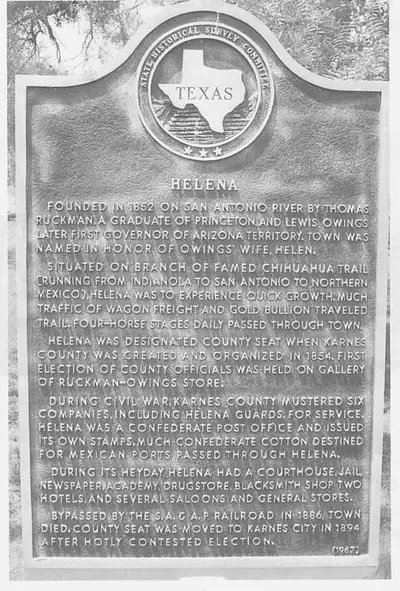
The rest of the century is a man putting down weight. He married Margaret Ellen McNamara at San Antonio on 15 January 1876 and they had eight children. He took the contract for the Helena courthouse around 1872, bought land across Karnes and DeWitt Counties until he held more than four thousand acres, and turned from sheep to cattle. In 1876 three sheep men, P. P. Short, John Riley and Joshua Butler, settled the small community of Cabeza.
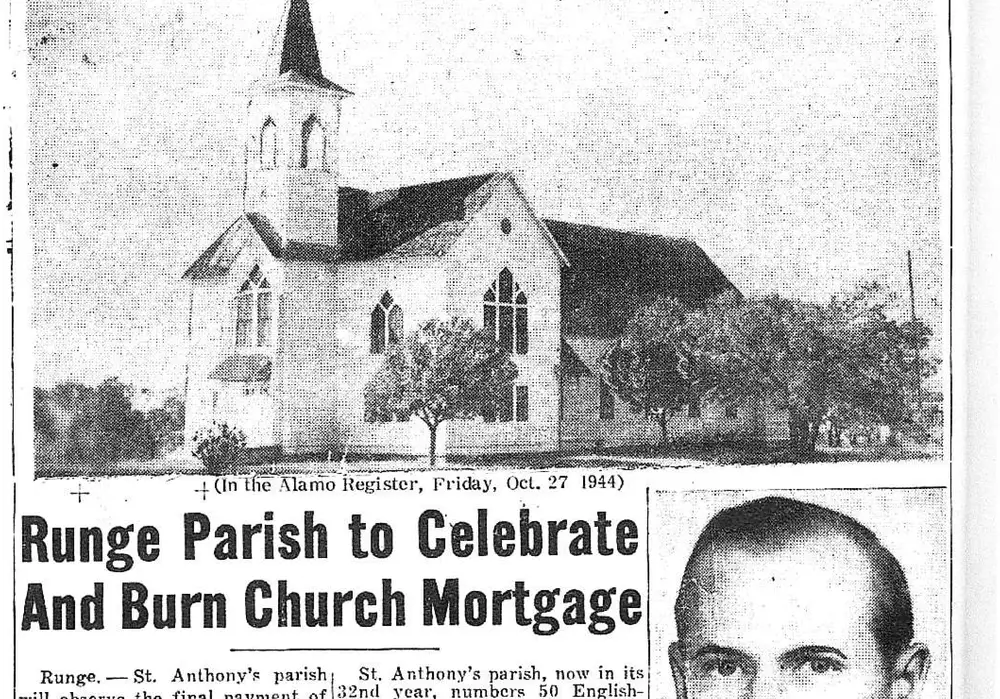
Around 1900 Father Tom Moczygemba chose a site in Runge for a church to be named for St. Anthony, on land the Runge Land Company gave. John and Margaret were Catholics and helped establish it about 1901.
Before the church there were kitchens. A parishioner writing her memories of St. Anthony’s recalled Mass being said in the family homes of the district, the Riley house among them. John died at his ranch on 1 November 1917 and was buried in the Catholic cemetery at Runge; Margaret died in 1942 and was buried beside him. In 1929 the land was surveyed and partitioned among the descendants into numbered tracts.
The ranch kept working, and the record keeps the ordinary detail with the same care it gives a muster roll: horses kept at Runge, used to work the cattle. That is the century in this family, written down because someone thought it was worth writing down.
John Oliver and Margaret Riley hosted reunions at their farm in Runge. The book keeps the photograph from 1968 and names every person standing in it, which is a genealogist’s idea of a good time and also the reason those faces are not anonymous now.
The last room is the work itself. The 2017 addendum records who assembled it: a great-grandson of the boy born at Cahersiveen, Robert M. Riley of Fort Worth, Texas. Three volumes, more than five years, and a family that can now be followed from a town on the Iveragh peninsula to a farm in Karnes County without leaving the page numbers behind.
The volumes hold more than dates. They hold a eulogy that calls Helen a gifted storyteller, a 1932 letter arguing with Washington, a parishioner’s memory of Mass in a neighbour’s front room. Grandad gathered all of it, and it is his gathering that makes this museum possible.
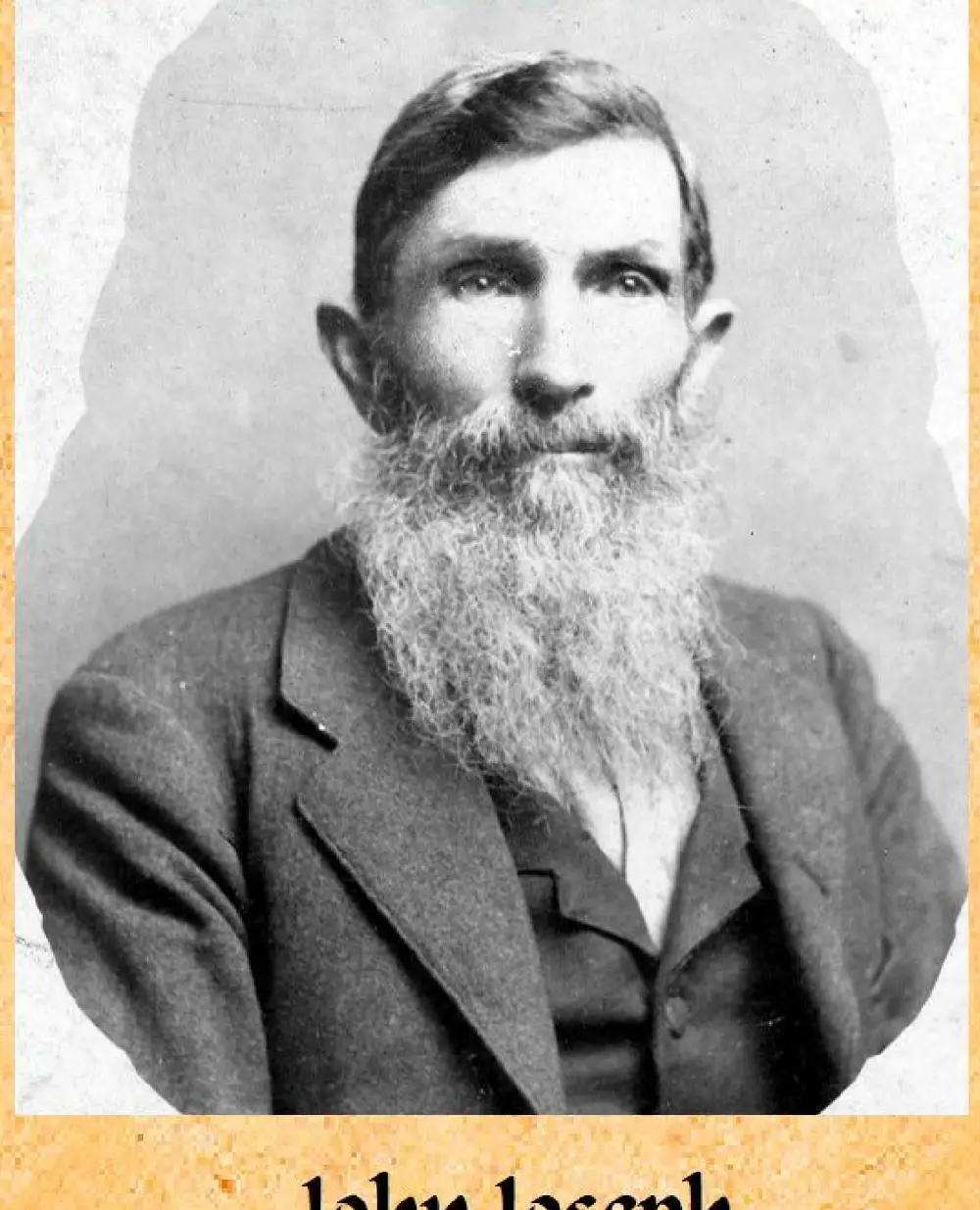
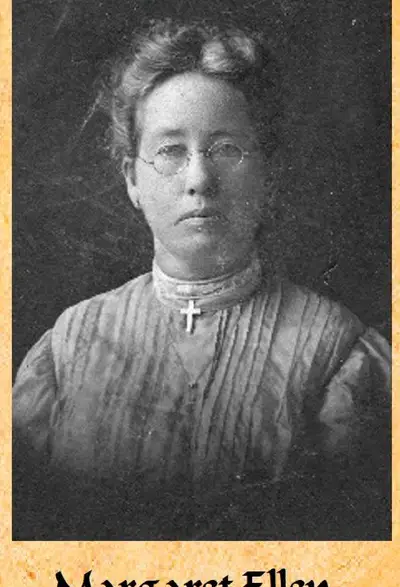
The founders
John Joseph Riley Margaret Ellen McNamara
Through the doors: the rooms, the tree, the record, the gallery.
This hall is walked
It needs JavaScript, WebGL and motion to walk down. The same seventeen entries, their plates and the founding portraits stand at rest in the museum's four rooms.